
Ask Us About Our Financing Options!
Treated Lumber Decks in Longview for Properties Needing Elevated Outdoor Space Above Sloped Yards or Wet Ground
Wood Decks That Handle Outdoor Exposure
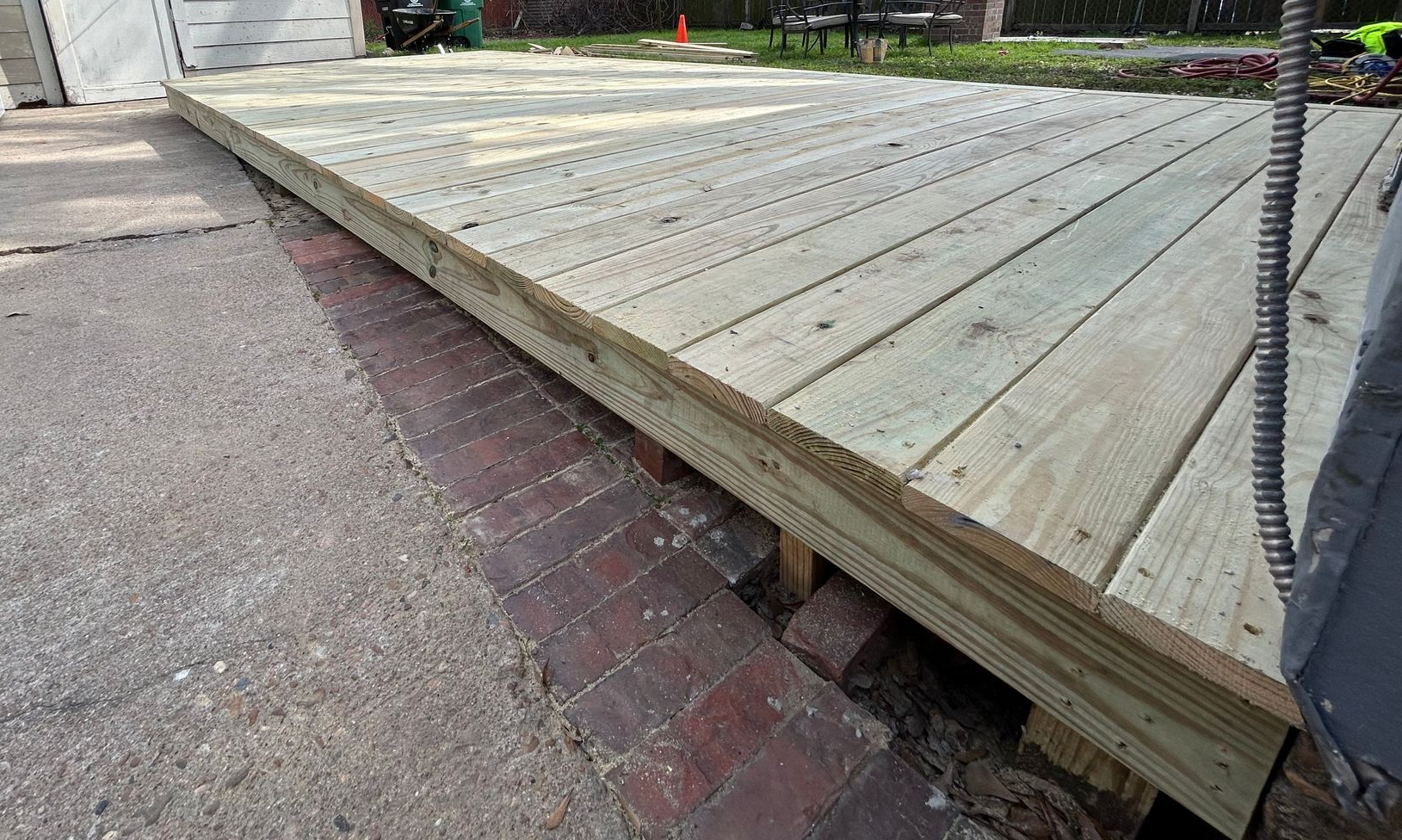
Treated lumber provides a deck material that resists rot and insect damage in East Texas humidity while remaining more affordable than composite alternatives, with pressure treatment forcing preservatives deep into the wood fiber to protect against moisture and termites. Eneca Concrete and Construction designs deck layouts that account for your property's grade, door heights, and how you plan to use the space, then builds the structure with treated posts, beams, and joists that support decking boards spaced to allow drainage and airflow. The finished deck creates level outdoor area where your yard slopes or stays wet, with railings and stairs positioned according to how you access the space from your house and yard.
Construction starts with setting posts in concrete footings below frost depth to prevent heaving, then building the frame with lumber sized for the span distances and expected load. Decking boards are fastened with spacing that allows water to drain through and wood to expand and contract as humidity changes between summer and winter. Railings meet code height requirements while matching the deck's overall design, with balusters spaced to prevent small children or pets from slipping through.
Request a detailed estimate based on the deck size and layout that works with your property's terrain and access points.
What Changes After Deck Construction Completes
Properly built treated lumber decks use frame members sized to prevent bounce or sway when people walk across the surface, with joists spaced close enough that decking boards don't flex underfoot. Flashing installed where the deck attaches to the house prevents water from entering the wall structure, and post footings extend below the frost line to keep the deck from shifting as the ground freezes and thaws. Fasteners are rated for treated lumber to avoid corrosion that weakens connections over time.
Once construction finishes, you notice the deck surface stays several inches above grade, keeping the space dry even after heavy rain and providing separation from mud and standing water common in low-lying areas. Furniture and grills sit level without sinking, and you gain outdoor square footage that functions regardless of what the yard beneath does during wet seasons. The wood's natural color fades to gray over time unless you apply stain or sealer to maintain the original tone.
Treated lumber requires periodic maintenance to preserve appearance, including cleaning to remove mildew and applying finish products that protect against moisture and UV damage. The treatment protects structural integrity, but surface appearance depends on how consistently you seal and stain the wood. Deck boards can be replaced individually if damage occurs without rebuilding the entire frame.
Questions Before Starting Your Deck Project
Homeowners planning deck construction often ask about materials, design considerations, and what happens after installation.
What makes treated lumber different from untreated wood?
Pressure treatment forces chemical preservatives into the wood under high pressure, penetrating deep into the grain to protect against rot, fungal decay, and termite damage that would destroy untreated wood in ground-contact or high-moisture conditions.
How high off the ground does a deck need to be?
Deck height depends on the elevation of the door it connects to and the grade beneath it, with most residential decks sitting anywhere from a few inches to several feet above ground based on the home's foundation height and yard slope.
Why do deck boards have gaps between them instead of sitting tight together?
Spacing allows rainwater to drain through the deck surface instead of pooling on top, and gives the wood room to expand when it absorbs moisture during humid periods without buckling or warping from compression.
How do soil conditions in Longview affect deck foundations?
Clay soils that expand when wet and shrink when dry require footings that extend deep enough to reach stable ground below the active zone where seasonal moisture changes cause movement, preventing posts from shifting as the soil cycles.
What maintenance does a treated lumber deck need?
Regular cleaning removes dirt and organic material that hold moisture against the wood, and applying stain or sealer every few years protects the surface from water penetration and UV damage that cause splitting and splintering.
Eneca Concrete and Construction builds decks sized and positioned to work with your home's layout and your yard's specific grade challenges. Schedule a property evaluation to review deck placement options and discuss railing and stair configurations that fit how you'll use the space.