
Ask Us About Our Financing Options!
Concrete Extensions in Longview for Driveways and Patios that No Longer Provide Enough Usable Area
Adding Space to Existing Concrete Surfaces
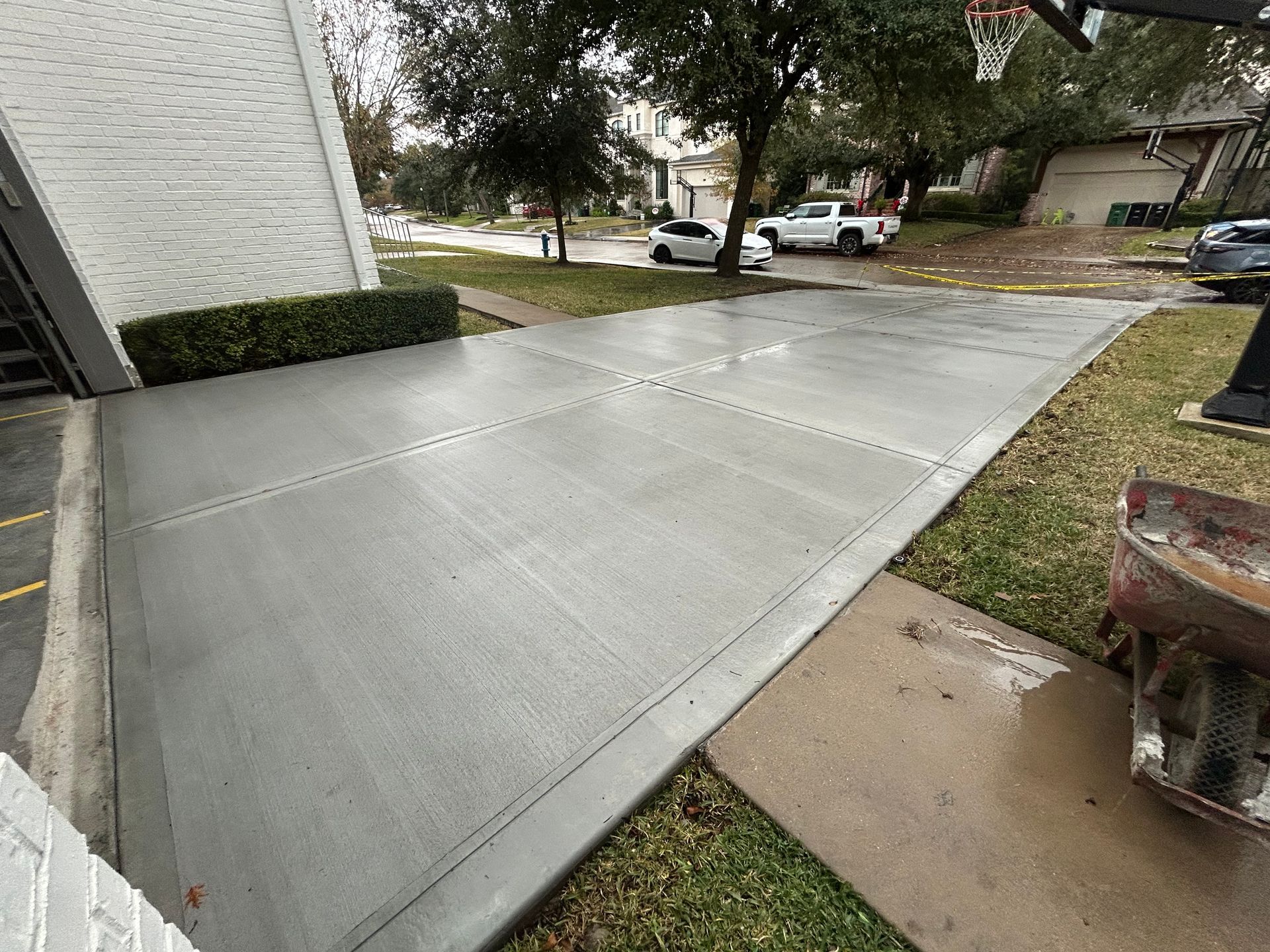
When your current driveway ends short of where you actually park or your patio stops before reaching the area you use for seating, adding concrete footage solves the problem without replacing what's already there. The process begins with evaluating the existing slab's condition and elevation to determine how the new section will tie in structurally and visually. Eneca Concrete and Construction pours extensions that integrate with your current concrete, matching thickness and finish while creating a connection that allows both sections to expand and contract independently as temperatures cycle through East Texas seasons.
The extension requires excavation and base prep that matches the original installation depth, with particular attention to maintaining consistent grade so water continues to drain correctly across both old and new surfaces. An isolation joint separates the existing concrete from the addition, preventing cracks in one section from transferring to the other while keeping the visual line clean and straight. The finish is matched as closely as possible to the original surface texture, though weathering and age will always create some color variation between sections poured years apart.
Arrange an on-site consultation to measure the area you want to add and assess how the extension will connect to your existing concrete.
How Extensions Address Space Limitations
Extending concrete involves more than just pouring additional square footage next to what's already there. The new section must be poured at the correct elevation to maintain drainage away from structures, and the base material beneath it needs the same compaction and stability as the original installation to prevent differential settling. If the existing slab has cracked or shifted, those issues get addressed before the extension proceeds so the new work doesn't inherit old problems.
After the extension cures, you gain the parking space, walkway width, or patio area that was missing, with a surface that handles vehicle weight or foot traffic the same as the original pour. The isolation joint between sections remains visible as a clean line but doesn't create a trip hazard or allow significant vertical movement. Water that previously ran off onto soil or grass now stays on the hard surface and drains to the edges as designed.
The decision to extend rather than replace depends on the existing slab's condition and whether it still drains correctly and sits at the right elevation. Extensions work well when the original concrete remains structurally sound but simply doesn't cover enough area. If the current slab has settled significantly or developed widespread cracking, replacement may address underlying issues more effectively than adding footage to a compromised base.
Common Questions About Adding Concrete
Property owners considering extensions typically want to understand how new concrete integrates with existing work and what affects the final appearance.
How do you match the finish of concrete that was poured years ago?
The texture can be replicated closely by using the same finishing technique, but the color of new concrete will be lighter than aged, weathered surfaces until it undergoes similar exposure to sun, rain, and traffic over time.
What is the joint between old and new concrete, and why is it necessary?
An isolation joint allows each section to expand and contract independently as temperatures change, preventing stress cracks from forming where the two pours meet, and it's filled with flexible material that keeps the gap sealed while allowing movement.
Can you extend a driveway that has existing cracks?
Extending a cracked driveway is possible if the cracks are stable and not caused by ongoing settling or base failure, though the condition of the original slab determines whether extension or full replacement makes more sense for long-term performance.
How wide does a driveway need to be to park two vehicles side by side?
A standard two-car width measures twenty to twenty-four feet, depending on vehicle sizes and whether you need room to open doors comfortably, with extensions in Longview often adding eight to ten feet to single-lane driveways that originally served smaller vehicles.
How long before the extension can handle vehicle traffic?
Concrete reaches sufficient strength for light foot traffic within a few days, but vehicle weight should stay off the surface for at least seven days to allow proper curing and prevent surface damage or cracking from premature loading.
Eneca Concrete and Construction evaluates your existing concrete and site conditions to determine the best approach for adding the space you need. Schedule a property evaluation to discuss extension dimensions and review how the addition will integrate with current surfaces.