
Ask Us About Our Financing Options!
Concrete Carports in Longview for Properties Needing Durable Vehicle Storage Surfaces
Vehicle Storage Surfaces That Handle Daily Use
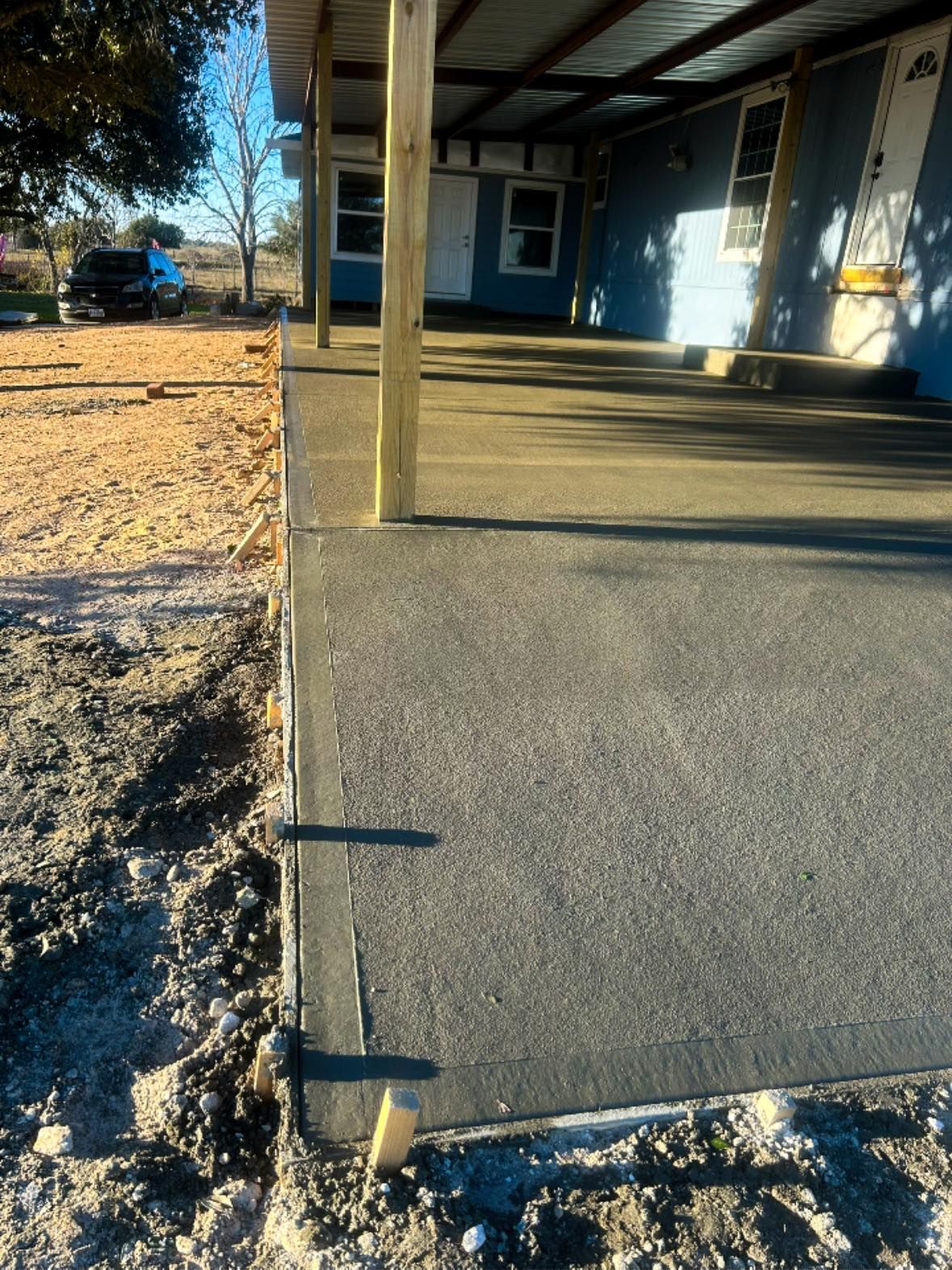
Gravel or dirt under a carport turns into ruts, mud, and uneven patches after a few seasons of rain and vehicle traffic. Eneca Concrete & Construction installs concrete carports throughout Longview that eliminate erosion, provide a smooth surface for daily vehicle movement, and require minimal upkeep compared to loose materials. The floor is sloped slightly to direct water runoff away from vehicles and prevent pooling that leads to standing water and surface deterioration.
Installation begins with removing existing material, grading for proper drainage, and compacting the base to support vehicle weight without settling. The concrete is poured with a finish that balances smoothness for easy sweeping and enough texture to provide traction when wet, then cured to handle the repetitive weight of cars, trucks, and equipment.
Install or upgrade carports with an on-site assessment to determine slope requirements and drainage integration.
What You Notice Once the Carport Is Finished
A carport transforms how the space functions day to day. You'll park on a surface that stays clean and level, sweep away leaves and debris without fighting ruts or loose gravel, and avoid tracking mud into your vehicle after rain. The concrete sheds water instead of absorbing it, which prevents the erosion and washout patterns that develop under carports with dirt or gravel bases.
The floor handles oil drips, tire wear, and repeated vehicle movements without breaking down or developing soft spots where tires park consistently. Because the surface is sloped and finished properly, rainwater moves off the slab toward drainage points rather than pooling near your vehicle or flowing toward the house.
Carports can be poured as standalone slabs or tied into existing driveways and walkways, depending on site layout and drainage needs. The thickness and reinforcement are sized to match residential vehicle weight, and expansion joints prevent cracking as concrete expands and contracts with temperature shifts common in East Texas.
Common Questions About This Service
Before installing a concrete carport floor, property owners typically want to know about durability, maintenance, and how the floor integrates with existing drainage patterns.
How thick does a carport floor need to be for regular vehicle use?
Residential carport floors are typically poured at four inches thick with reinforcement to handle the weight of cars and light trucks without cracking under repeated load.
What finish works best for a carport floor?
A broom finish provides enough texture for traction when the surface is wet while remaining smooth enough to sweep clean easily, balancing safety and maintenance convenience.
How is drainage handled in a carport floor installation?
The slab is graded with a slight slope away from structures and vehicles, directing water toward the perimeter where it drains into surrounding soil or connects to existing drainage systems.
What prevents a carport floor from cracking over time?
Proper base compaction, reinforcement with rebar or wire mesh, and control joints placed at regular intervals allow the concrete to expand and contract without developing random cracks.
When is the best time to pour a carport floor in Longview?
Avoid pouring during freezing temperatures or periods of heavy rain, as both interfere with curing; moderate temperatures and dry conditions produce the strongest, most durable results.
Eneca Concrete & Construction evaluates your carport layout, drainage conditions, and vehicle storage needs to design a floor that performs reliably for decades. Arrange a consultation to review your site and receive a project estimate.