
Ask Us About Our Financing Options!
Concrete Slabs in Longview for Properties Requiring Stable Foundations, Garage Floors, or Additions
Foundations Built to Last Decades
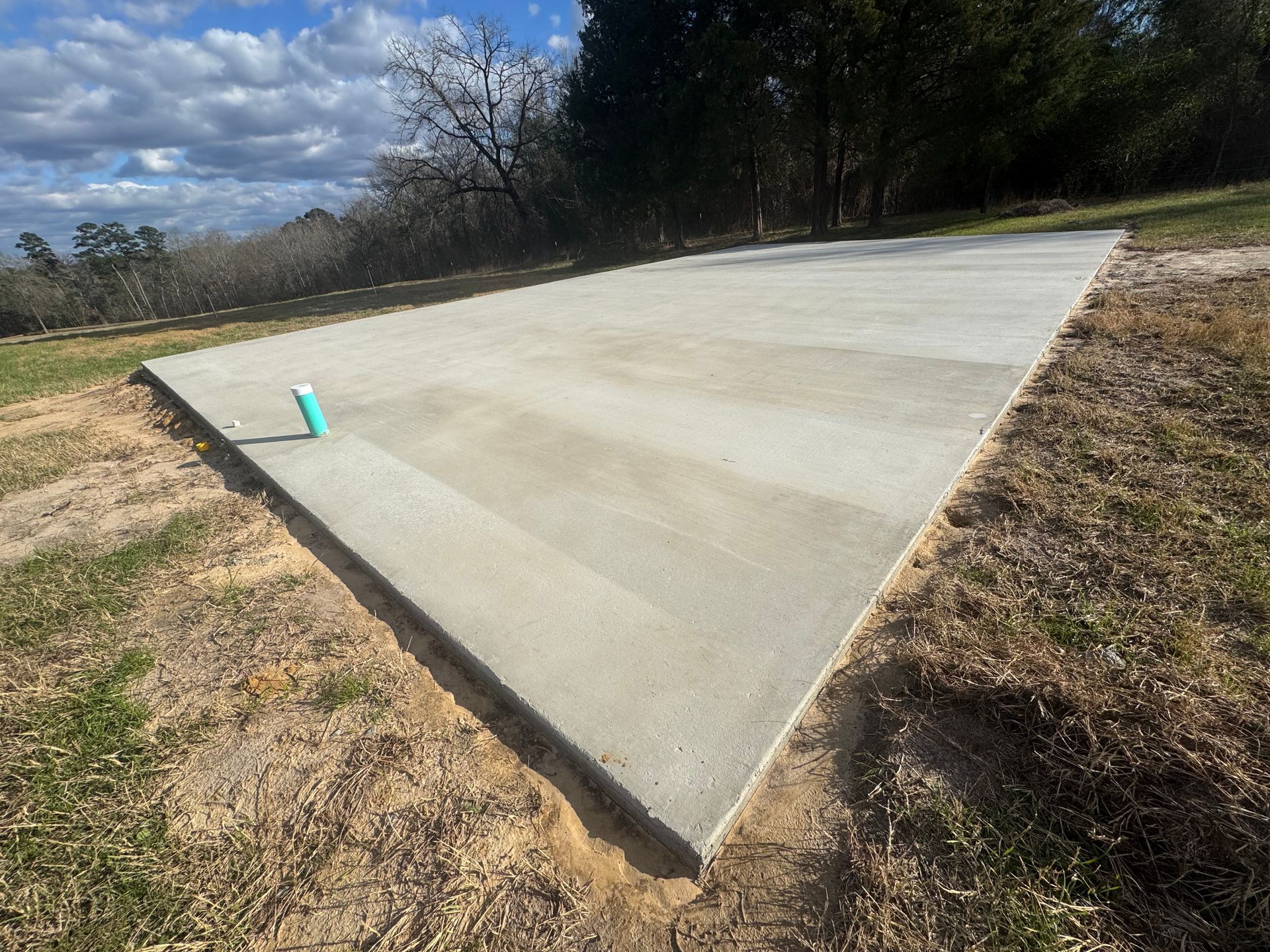
Eneca Concrete & Construction delivers concrete slabs throughout Longview, designed to support structures reliably over decades of use. Whether you're adding a garage, pouring a foundation for a new shed, or preparing ground for a commercial addition, the slab becomes the permanent base that carries all the weight above it. Proper soil preparation and reinforcement determine whether that base stays level or develops cracks and settlement issues within the first few years.
The process begins with soil compaction and grading to create a stable, level subgrade that won't shift under load. Reinforcement is integrated into the pour based on what the slab will support, and the concrete is finished to specifications that match the intended use. In East Texas, clay-heavy soils expand and contract with moisture changes, which makes proper base preparation and reinforcement critical to preventing future movement.
Schedule a site evaluation to identify specific soil conditions and determine the reinforcement your project requires.
What Proper Slab Construction Requires
A concrete slab for a garage or foundation involves more than pouring cement over dirt. The subgrade must be compacted to prevent settling, and any soft or organic material gets removed before gravel base goes down. Reinforcement placement depends on load expectations—residential garages need different rebar spacing than commercial equipment storage or structural foundations.
Once the slab cures and hardens, you'll notice a surface that remains level under vehicle traffic, doesn't crack at stress points near doorways or corners, and sheds water toward drainage points instead of pooling. The finished slab supports the structure above it without shifting, even as soil moisture fluctuates with seasonal rain patterns common to this region.
Slabs poured for additions must integrate with existing foundations, which requires matching elevation and ensuring proper joints prevent cracking where new concrete meets old. Expansion joints are placed at intervals to allow controlled movement rather than random cracking, and the finish can be troweled smooth for indoor use or textured for traction in outdoor applications.
Questions Before Starting Your Project
Property owners in Longview often ask about preparation, timing, and what makes one slab more durable than another. These answers cover the most common concerns before pouring a new foundation or garage floor.
What preparation happens before concrete gets poured?
The site is excavated to the required depth, soft soil is removed and replaced with compacted fill, and a gravel base is leveled and compacted to create a stable subgrade that won't settle unevenly.
How does clay soil in Longview affect slab construction?
Clay expands when wet and contracts when dry, which creates upward and downward pressure on the slab, so proper base preparation and reinforcement are required to resist that movement and prevent cracking.
What does reinforcement actually do in a concrete slab?
Rebar or wire mesh distributes load across the entire slab and controls cracking by holding concrete together even if minor fractures develop from settling or temperature changes.
How long does a slab need to cure before it can handle weight?
Concrete reaches functional strength in about seven days for light use, but full curing takes 28 days, so vehicle traffic and heavy loads should wait until the slab has fully hardened.
What's included in a slab pour for a garage or shed?
The process includes site excavation, base preparation, reinforcement installation, concrete placement, finishing to the specified texture, and control joint cutting to manage where cracks form if they develop.
Eneca Concrete & Construction works with residential and commercial property owners to design slabs that match the intended load and site conditions. Request a detailed estimate based on your project's foundation requirements and soil characteristics.