
Ask Us About Our Financing Options!
Deck Restorations in Longview for Decks Suffering from Worn Surfaces, Faded Finishes, and Minor Structural Decline
Bringing Aging Decks Back to Full Function
Years of sun exposure, moisture cycles, and foot traffic leave deck surfaces splintered and gray, with finish coatings worn away and fasteners corroded to the point where boards have worked loose even when the underlying structure remains intact. Full restoration goes beyond spot repairs to address every aspect of the deck's condition, combining structural improvements where needed with surface refinishing that brings back the wood's protected appearance and smooth texture. The process starts with inspection to identify which frame components need reinforcement or replacement, then moves through surface preparation that removes failed finish and damaged wood fibers before applying new protective coatings. Eneca Concrete and Construction handles restorations that return older decks to functional condition without the cost of complete tear-out and rebuild when the bones of the structure still have years of service left.
Restoration work includes replacing individual boards that have split or rotted beyond repair, sanding or planing surfaces to remove splinters and weathered grain, reinforcing connections where joists attach to beams or the ledger, and applying stain or sealer that penetrates the wood to repel water and resist UV breakdown. Railings receive similar attention, with loose balusters refastened and damaged sections rebuilt to restore stability.
Request a planning session to review your deck's current condition and discuss which restoration steps will have the most impact on appearance and longevity.
What Proper Restoration Includes
Comprehensive restoration addresses both the structural components that determine safety and the surface condition that affects daily use and weather resistance. Frame inspection identifies joists that have sagged from inadequate support or rotted where water collected, posts that need additional bracing, and ledger connections that require upgrading to current flashing standards. Surface work removes the outer layer of weathered wood that has lost its ability to hold finish, creating a fresh surface that accepts stain and sealer effectively rather than shedding it within a season.
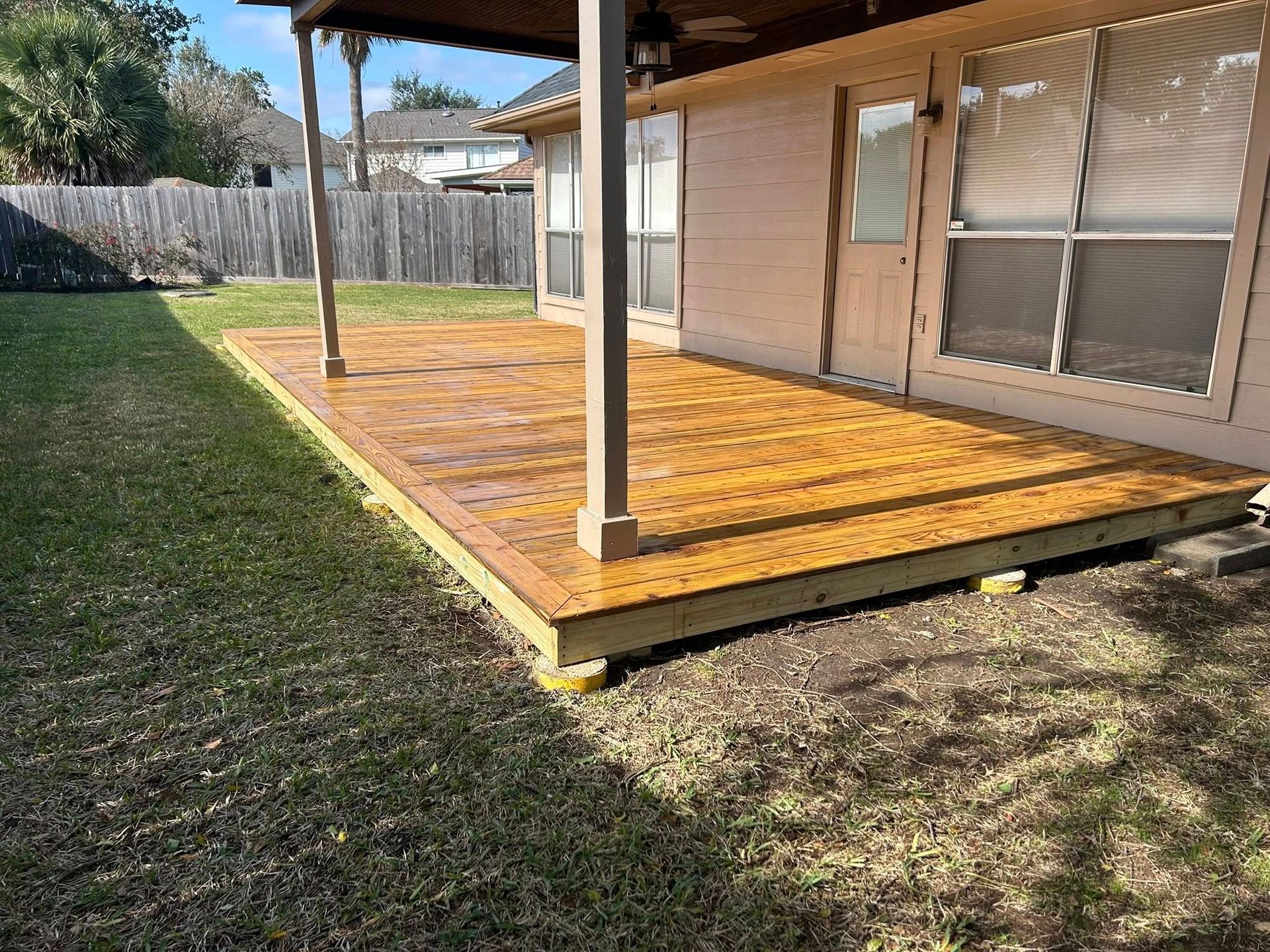
Once restoration completes, you notice the deck surface feels smooth under bare feet instead of catching splinters, boards sit tight and level without gaps widening unevenly, and the finish gives the wood a consistent color rather than patchy gray and brown tones. Water beads off the surface instead of soaking in immediately, railings feel solid when gripped, and the entire structure stops creaking and flexing during normal use. The restored deck looks deliberate and maintained rather than neglected, with years added to its functional lifespan before more extensive work becomes necessary.
Restoration timing matters because waiting until structural damage becomes severe turns what could have been refinishing and minor repairs into partial or full replacement. Decks that receive attention while most components remain sound cost significantly less to restore than those left until rot spreads through the frame or footings fail. The goal is catching decline early enough that protective measures and targeted fixes prevent cascade failures that compromise the entire structure.
What Property Owners Usually Ask
Homeowners considering deck restoration want to understand what the process involves and whether it delivers better value than replacement.
What does deck restoration include that simple refinishing doesn't?
Restoration combines structural repairs like replacing damaged joists, reinforcing connections, and upgrading inadequate supports with surface refinishing, while refinishing alone only addresses appearance without fixing underlying problems that affect safety and longevity.
How do you prepare an old deck surface for new stain or sealer?
Preparation involves cleaning to remove dirt and mildew, stripping or sanding away failed finish, and smoothing the wood surface to remove weathered fibers that won't hold new coatings, with the goal of reaching sound wood that can absorb protective products effectively.
When does a deck need restoration instead of just repair?
Restoration makes sense when the deck shows widespread surface wear, fading, and minor damage across most of the structure but the frame remains fundamentally sound, while repair addresses isolated failures in otherwise well-maintained decks.
How long does restored finish last on a deck in East Texas?
Finish longevity depends on product quality and exposure to sun and rain, with most stains and sealers requiring reapplication every two to four years in Longview's climate where high humidity and intense summer sun accelerate breakdown.
Can you restore a deck that hasn't been maintained in years?
Neglected decks can often be restored if the main structural components haven't rotted through, though the process requires more extensive surface prep and may involve replacing a higher percentage of decking boards than decks that received periodic maintenance.
Eneca Concrete and Construction evaluates whether your deck is a candidate for restoration or has deteriorated to the point where replacement delivers better long-term value. Schedule a deck inspection to assess structural condition and discuss the restoration approach that matches your deck's specific needs and your timeline for continued use.